



Writing with Light: A Lighting Designer’s Creative Process
French design firm Jean-Paul Haure Studio exists where emotion and technology meet, translating ambitious events into experiences that feel both precise and deeply human.
From large-scale trade fairs to imagined fashion runways, founder Jean-Paul Haure treats every project as a text to be written in light, while his son and business partner Sadry Haure-Bouzegaou builds the infrastructure that turns that vision into reality.
Vectorworks Spotlight sits at the center of the studio’s process, supporting a poetic, human-focused design language and giving shape to both client work and experimental scenographies.
Illuminated Origins
Jean-Paul Haure Studio took shape in 2003, when Jean-Paul (pictured below) decided to dedicate himself fully to lighting design, scenography, and art direction after years spent exploring light in traditional dance festivals and early event work
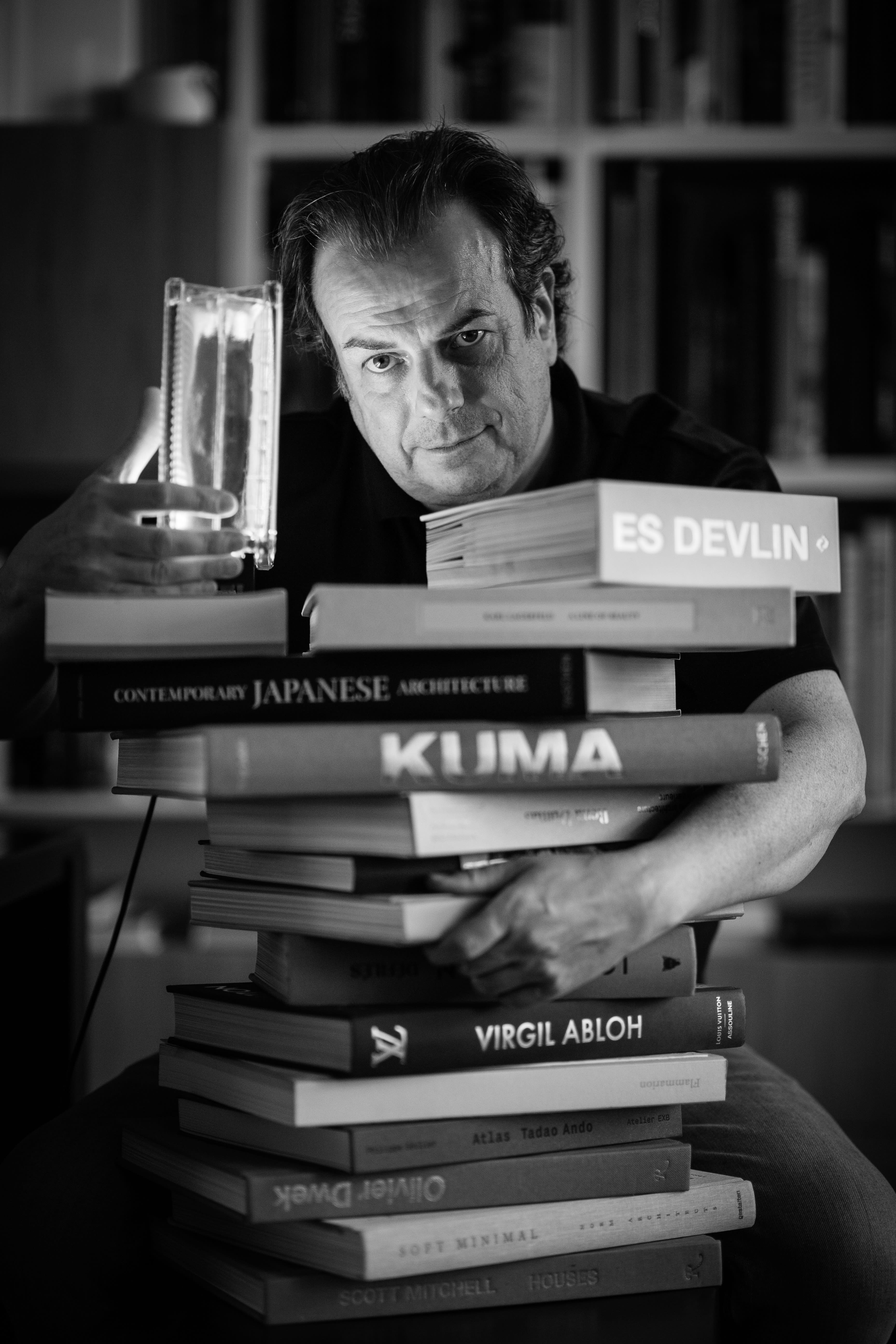
“I was fortunate enough to be able to work as a lighting designer for dance and traditional arts troupes from a very young age,” Jean-Paul recalled, “which allowed me to experiment with light, but above all, with color, materials, and especially textiles and stage costumes.”
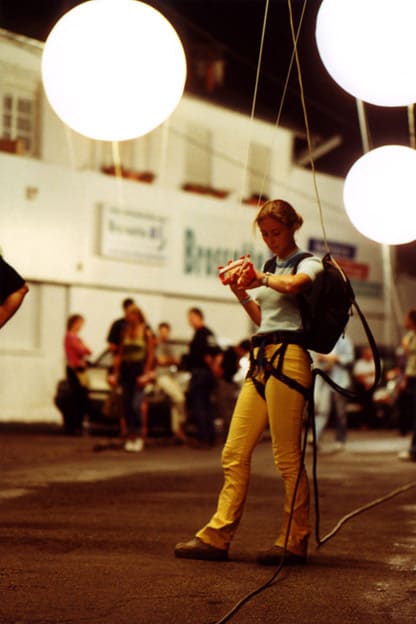
That curiosity soon pushed him beyond the usual boundaries of event technology. During work on Telethon Paris in 2013, Jean-Paul developed a system where performers walked a 1.7-kilometer route with giant helium balloons lit from within, powered by backpack generators and guided to move like a luminous procession through the city.
The result felt less like a technical stunt than a roaming, illuminous illustration, an early sign of Jean-Paul’s instinct to hide complexity so audiences experience pure emotion.
As a teenager, Sadry (pictured below) began following his father to production sites each summer and looking for ways to contribute. After realizing there was a gap around fast visual, audio, and video editing support, he taught himself Adobe tools, started cutting post-event films, and eventually discovered that his own passion lay in the technology and business that surrounds creative work rather than in design itself.
“The arrangement is simple: he is the creative engine, and I handle the business and operations to support our expansion,” said Sadry, describing how his business training now underpins Jean-Paul Haure Studio’s international growth.

Working closely with his father, who’s deaf, has also shaped how Sadry understands his father’s perspective on the world. Jean-Paul’s deafness brings daily challenges to life and work, yet his persistence has become a quiet example of grit that informs how the studio advocates for others with “invisible” disabilities, especially in an industry that often overlooks them. “His deafness has, of course, been a big challenge to navigate in life and work, but he never gave up,” said Sadry, adding that he hopes their collaboration shows such challenges “can be signs of strength, not weakness.”
The Design Language of Jean-Paul Haure Studio
At Jean-Paul Haure Studio, light is never just illumination; it’s the primary language of a design that aims to be poetic and human-focused before it’s technical.
The studio pursues a sensitive touch in each project, seeking to “transcend technique” while still mastering every tool needed to realize complex scenic designs and event environments.
“I like to say that ‘light writes and shadow carries emotion’ — this is at the heart of our philosophy at Jean-Paul Haure Studio,” said Jean-Paul.
The designer’s process always begins with words. “There's one unchanging thing for starting out: a blank sheet of paper, whether it's in a sketchbook or in Vectorworks,” he explained, noting that he never starts from a template but from a title, fragments of writing in a notebook, and the mental images a client’s request evokes.
Surrounded by books on design, fashion, architecture, and lighting that he calls “the guardians of my imagination,” Jean-Paul writes out the feelings and meanings he wants a scene to express, then sketches simple but structured worlds that already feel realistic in his mind before moving into digital space.
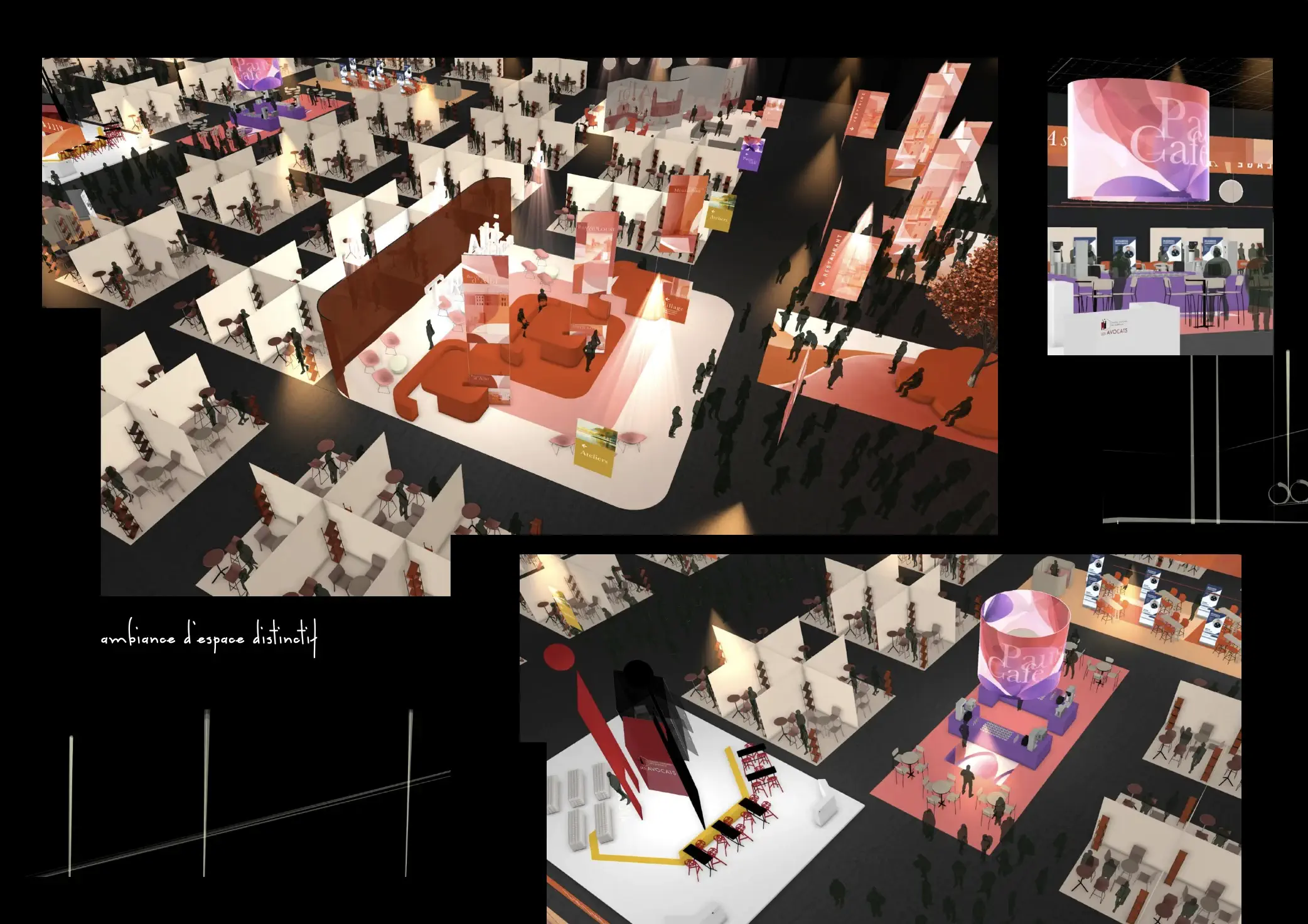
 Conceptual design of CNA 2026. Producer: A La Une | Client: Conseil National Des Avocats | Project Title: CNA 2026 | Design: Jean-Paul Haure | Credits: A La Une © JPHSTUDIO | 2025.
This philosophy guided Jean-Paul Haure Studio’s work on the upcoming CNA 2026 trade fair, the French National Lawyers’ Congress, which will welcome more than 6,000 participants over three days. “The agency that sought our perspective wanted to highlight the regional identity and way of life,” Jean-Paul noted, describing a brief that asked him to translate the charm of southern France, like its sun, architecture, landscape, and colors.
So, instead of designing a neutral convention layout, the studio envisioned an environment where lawyers move through light-soaked gathering areas, shaded rest zones, and social spaces that all echo the openness and warmth of the host region.


Conceptual design of CAN 2026. Producer: A La Une | Client: Conseil National Des Avocats | Project Title: CNA 2026 | Design: Jean-Paul Haure | Credits: A La Une ©
Meeting that goal demanded both poetry and rigor. The design had to integrate several distinct zones, each potentially serving up to 4,000 people, so Jean-Paul treated circulation, sightlines, and moments of rest as part of the story, choreographing how visitors would move between sessions, encounter trees and natural elements, and still feel collectively part of a single event and not just scattered across a maze of halls.
Using Vectorworks Spotlight as a “Third Hand”
With its first license of Vectorworks Spotlight in 2003, Jean-Paul Haure Studio focused on 2D drawings, plans, and technical diagrams for event work. Over time, the studio expanded into 3D and hybrid 2D/3D workflows in the software. And, more recently, the studio has added Vectorworks Design Suite and ConnectCAD to its repertoire.
Jean-Paul approaches digital drawing as an extension of his notebooks, where he writes about his intentions for a project. “Using Vectorworks, I implement a tracing methodology specific to each project, employing a system of grids, perspective points, and viewpoints from the spectators' or visitors' perspectives,” he explained. Starting with basic 2D shapes allows him to better understand the space; then, he evolves these shapes with textures, details, and data.
He moves back and forth between handwritten notes and Vectorworks, calling the software his “third hand,” and often assigns simple color textures first so he can return later for full rendering, a rhythm that frees him to focus on sensation and structure while the design is still evolving.

Conceptual design of CNA 2026. Producer: A La Une | Client: Conseil National Des Avocats | Project Title: CNA 2026 | Design: Jean-Paul Haure | Credits: A La Une © JPHSTUDIO | 2025.
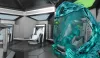
This method proved especially powerful for CNA 2026. Starting from a simple PDF hall plan provided by the agency, Jean-Paul rebuilt the MEET exhibition center inside Vectorworks and modeled key elements such as a circular LED screen (above) over the central stage, meeting and rest zones, and large dining areas that still feel welcoming at scale.

Conceptual design of CNA 2026. Producer: A La Une | Client: Conseil National Des Avocats | Project Title: CNA 2026 | Design: Jean-Paul Haure | Credits: A La Une © JPHSTUDIO | 2025.
Jean-Paul also produced immersive 3D renderings and perspectives that helped clients immediately picture themselves inside the concept and understand its atmosphere. For service providers, the same model helped generate precise documentation on lighting, power distribution, and AV requirements, down to millimeter-calibrated positions for fixtures and custom pieces, all while keeping the literary throughline of the project intact.
Finding New Opportunities
Even with this proven digital workflow, Jean-Paul Haure Studio keeps reaching toward new creative tools, particularly artificial intelligence (AI), as a way to deepen rather than shortcut the artistic process.
Jean-Paul and Sadry have spent extensive time prompting AI, using technical terms, light color charts, photometric language, and photographic direction to teach the systems how to speak their own visual dialect.
“Artificial intelligence is all about words, and that's perfect, because we love to write and we love to describe the scenographies and aesthetic choices we propose,” said Jean-Paul, describing prompts that read like short poems about light, texture, and atmosphere rather than simple commands.
For the designer, AI contributes textures, background visuals, and early mood images, noting that features like Vectorworks’ AI Visualizer speak to the promising present and future of AI technology.
Jean-Paul’s strength as both designer and writer shapes how he approaches these tools. He insists that “AI needs meaning, intelligence, sensitivity, and emotion because ultimately it lacks these characteristics inherent to humans.” He frames his design work as an act of interpreting a text, script, or idea within space and time.
Without that sensitive reading, he believes AI cannot offer an original interpretation, which is why his prompts carry detailed emotional and technical instructions that mirror how he “writes the light” before drawing it. For Jean-Paul Haure Studio, creativity goes into the prompt first; the usefulness of the output reflects the quality of that initial imaginative effort, making AI “one more actor in our imagination and in the way we feed it, regenerate it, and make it dream.”
This search for new paths of creativity aligns with a quote from Japanese-born architect Tadao Andō that Jean-Paul keeps close: “Never give up. And find opportunities on your own initiative. Don't rely on others, but focus on the paths you find for yourself. If you approve of this new way of living, why not continue?”
AI is one such path, but so are the projects he develops entirely in Vectorworks Spotlight without any client commission, which function as both a training ground and an artistic escape. “Creating designs with Vectorworks has become a powerful and restorative artistic outlet,” he said, noting that, over the course of a year, more than 30 free projects may emerge from his imagination into full 3D perspectives.
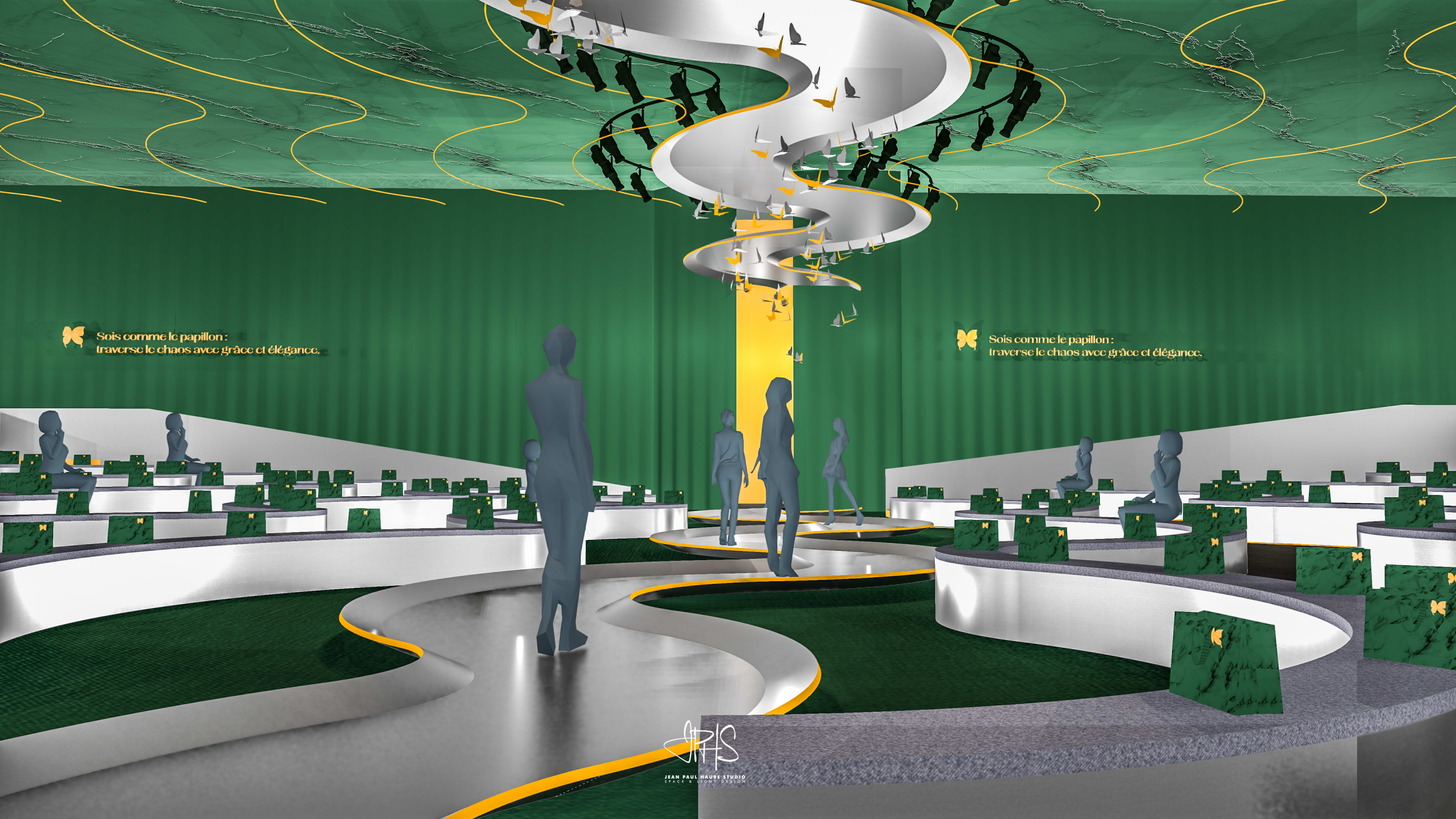
One ongoing study is a fashion runway concept, a world that fascinates Jean-Paul because it compresses craft, emotion, photography, and brand identity into a brief 20- or 30-minute show with enormous media impact.
For this imagined event, he explored an entirely curved floor plan where a catwalk, guest benches, ceiling reflectors, and decorative lighting all follow fluid lines, then used Vectorworks Spotlight to create curved sets, test elevations, and quickly generate wireframe and volumetric renderings. Camera objects were placed to match guest and media viewpoints, leading to slightly tiered seating and a constellation of details like guest gifts on benches, signage, and hanging golden butterflies that echo the couture collection’s spirit.
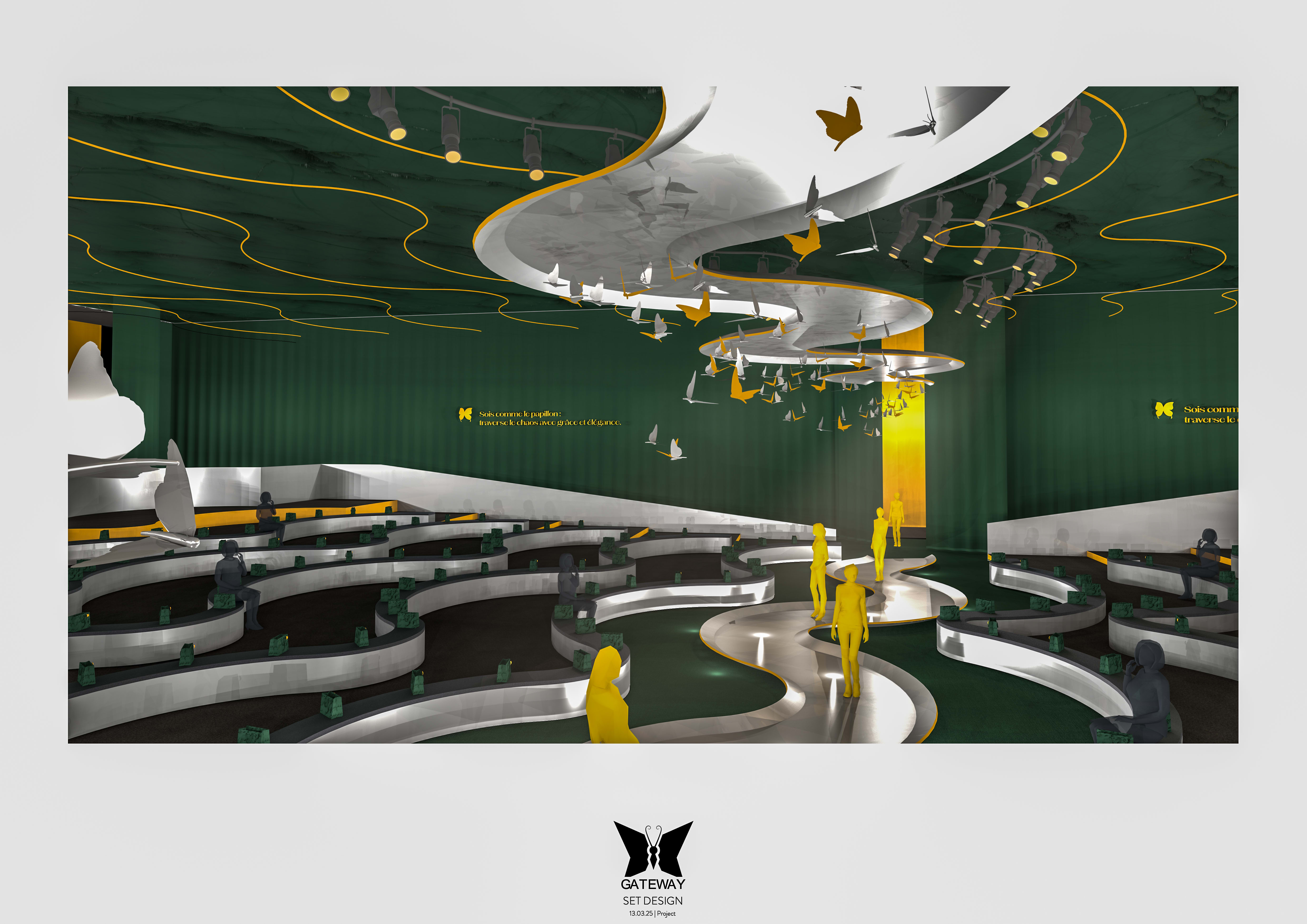
These projects keep Jean-Paul’s skills sharp, stretch his imagination beyond client constraints, and act as proof-of-concept portfolios that demonstrate what Jean-Paul Haure Studio can achieve when the right brief appears. “I search, I explore, I transform a mistake, a constraint, into a powerful idea,” he said of this ongoing practice, noting how often small errors in Vectorworks become new set elements once explored in depth.
Whether lighting real trade fairs or dreaming up fictional couture runways, Jean-Paul and Sadry return to the same core belief: every space holds a story, and every story can be written in light.
Further References